Our second lesson of the term address the question of how relationships to land and place get recognized in law.
Elyse Loewen, CC BY NC SA 4.0
Learning Objectives
Learning objectives are statements about the skills, knowledge and attitudes learners will acquire or develop when they complete this lesson.
By the end of this week, you should be able to:
- Discuss different approaches to the legal interpretation of the Peace and Friendship Treaties and explain the consequences of these different approaches.
- Identify different forms of legal land relations, situating Anglo-Canadian property as just one of those forms in its historical and colonial context.
- Critically analyze the natural law theory of labour and possession as the basis for property.
- Describe the common law test for possession and the relative nature of possession and apply these concepts to analyze problems.
- Thoughtfully reflect on how our multi-juridical context of land relations can be brought to bear on real world problems.
A Question of Recognition #
This week we start to explore a fundamental issue: How do (and should) relationships to land get recognized in law? And what does the answer tell us about the issue of who benefits from different forms of relation?
From an Anglo-Canadian legal perspective, significant attention is paid to acts of possession, as you saw from our discussion of Harrison v Carswell last week. It is by possessing something that a person gains recognition of certain legal entitlements that we tend to call “property”–a relationship that is at once physical (an act of control) and psychological (a matter of intention). But of course this is not the only possible kind of relationship to land that law might recognize and prioritize. Indigenous Nations approach these relationships in the context of their own legal orders, and treaties provide an inter-societal and transnational framework for encounters between different systems, principles and worldviews. In class this week, we will start by discussing the historical context for these land relations in Mi’kma’ki / Atlantic Canada in order to set the stage for our weekly problem.
Weekly Problem: Wowkwis
After you have read through the background for this week's lesson above, your next step is to review the weekly problem.
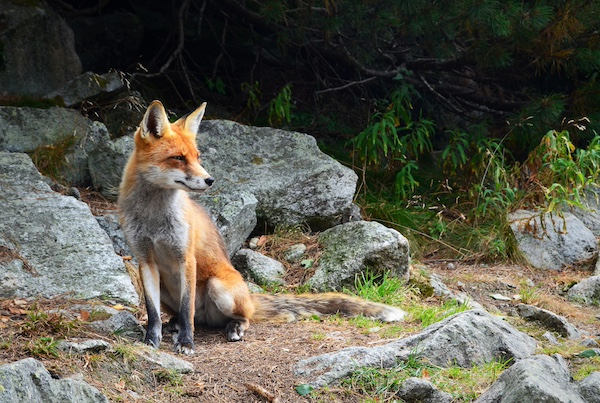
A Mi'kmaw hunter pursues a fox through the woods, where it is killed by a dog walking off-leash with its owner. You are asked to consider the possible legal relationships at play in a claim to ownership.