This week we explore the emerging and evolving Charter right to shelter in Canada and its relation to public property.
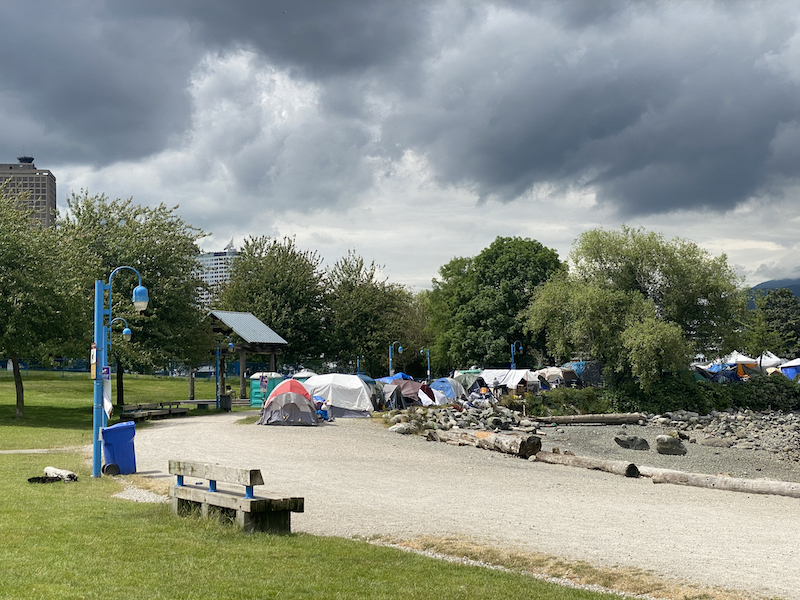
CRAB Park, Vancouver. Photo by Elyse Loewen
Learning Objectives
Learning objectives are statements about the skills, knowledge and attitudes learners will acquire or develop when they complete this lesson.
By the end of this week, you should be able to:
- Describe and apply the emerging constitutional right to shelter in Canada and distinguish between those aspects of the doctrine that are settle law and those that are still in flux.
- Identify the dimensions of the emerging right to shelter being driven by the the modern style.
- Critically assess how local governments are responding to the obligations imposed by the emerging right to shelter and analyze what further legal and policy reforms might be appropriate in this context.
While accurate data on the circumstances of unhoused people can be difficult to get, Canada is clearly experiencing a rise in chronic homelessness, even as shelter capacity in many cities has increased following the COVID-19 pandemic. This has resulted in widespread sheltering in public spaces–both temporary and longer-term–in many Canadian cities.
Addressing homelessness and access to housing engages a complex set of legal and policy issues, actors and decision-making networks. One aspect of this context in which Canadian courts have been especially active is the constitutional right of unhoused persons to access and shelter in public spaces–namely, municipal –in order to meet their immediate needs. The role of these rights and challenges to their realization have gained national attention from the circumstances in cities around the country.
Our goal this week is to explore how rights to access public property in the shelter context have emerged and evolved in the common law courts, primarily through a series of cases in British Columbia and Ontario since the mid-2000s. We will aim to understand the changing scope of these rights over time, and grapple with the implications of courts’ heavy reliance on a functionalist approach to the right to shelter in this context.
Weekly Problem: Sheltering in Public Spaces Bylaw
After you have read through the background for this week's lesson above, your next step is to review the weekly problem.
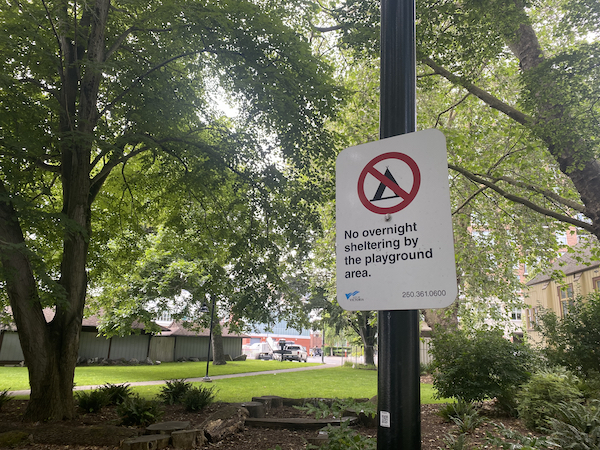
Analyze a model municipal by-law regarding sheltering on public property according to the changing constitutional standards for a right to shelter in public spaces.