This hypo concerns a heritage corn grower's attempts to prevent pollination of their crops from GMO varieties grown by a neighbouring farmer.
Tahmeed Ahmad on Unsplash
Hypothetical Facts #
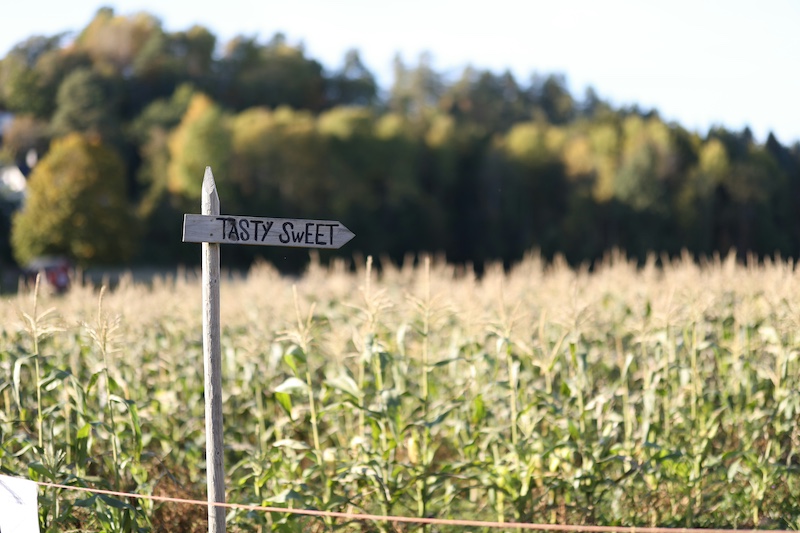
A farmer grows heritage sweet corn on a small acreage. They market the corn as GMO-free and sell it at a local farmers’ market at a premium price (around $1/ear more than other varieties). Each year, the farmer carefully cultivates, collects and stores seed from a portion of their crop to plant the following season.
One of the neighboring farm properties has recently been purchased from a retiring farmer named Hatfield by the nearby agricultural college to use as an experimental site for developing new corn varieties. Some of those new varieties are Genetically Modified Organisms (GMOs) designed for features such as disease resistance. Over the years, research into GMO corn and other crops has become a lucrative source of income for the college–especially in those instances where it has acquired patent rights to the exclusive reproduction and use of the varieties it has developed. The college plans to employ over fifty people from the surrounding community in various roles at its new experimental site.
Several years ago, Hatfield (the college’s predecessor in title) entered into an agreement with McCoy (from whom the heritage corn farmer purchased their land), promising that they, Hatfield, would only engage in “sustainable” farming methods on the land defined as, among other things, excluding the planting or production of GMO crops. When the agricultural college was negotiating to purchase the land, Hatfield had mentioned in passing that there were some “sustainability constraints” around using the land but did not elaborate.
The Problem #
The heritage farmer is worried about “genetic drift” from GMO varieties grown on the college lands contaminating their heritage corn crop through cross-pollination. What legal claims, if any, might the farmer make against the agricultural college to prevent it from growing GMO corn on its land and what are the chances that those claims will succeed? For the purposes of this question, you may assume proof of a nuisance caused by the college.
Developing Your Answer #
This week we return to practicing the skills of issue spotting and legal analysis of a hypothetical fact pattern. From the list below, you are encouraged to start your readings with either Shelfer v City of London, which deals with the tort of nuisance, or Keppell v Bailey, which deals with the topic of covenants on title to land.
Readings for this Week
Choose one of the reading materials from the list below--ordered alphabetically--to start analyzing this week's problem. At the end of your reading path you should have covered each of the materials on the list.
- Austerberry v Corporation of Oldham, [1885] 29 ChD 750: The plaintiffs brought an action to enforce the burden of positive a covenant to maintain a road. The court addresses the questions of when either the benefits or the burdens of a covenant can run with the land.
- Black v Canadian Copper Co., (1917), Archives of Ontario, RG 80-6-0-22: The plaintiffs brought an action because of harm caused by sulphur dioxide fumes from the defendant's mining operation.
- Canada Paper Co v Brown, 1922 CanLII 585 (SCC), [1922] 63 SCR 243: A paper company who near Brown's home introduced a sulphates into their production, which produced harmful fumes that carried over to Brown's property.
- Keppell v Bailey, [1834] EWHC Ch J77: This case considers the enforceability of a covenant between the owners of an ironworks and a railway constructed to transport limestone for use in the ironwork's furnaces. The court addresses the question of whether the covenant can be enforced against subsequent owners of the ironworks.
- Shelfer v City of London Electrical Lighting Co., [1895] 1 Ch 287: Shelfer suffered a nuisance from the defendant electric company which caused damages to the foundations of his pub and generated noise and other annoyances. Having found the existence of a nuisance, the court considers the question what remedy is appropriate.
- Tulk v Moxhay, (1848), 41 ER 1143 (Ch): Tulk sold a piece of land with the restriction that the garden be maintained and that he have access to it. Moxhay subsequently purchased the land, with notice of the covenant. Moxhay sought to alter the garden.