Returning to the context of our problem in Week 1, this hypothetical explores the interpretation and consequences of legislation by the provincial government that could apply to "take" a landowner's right to exclude.
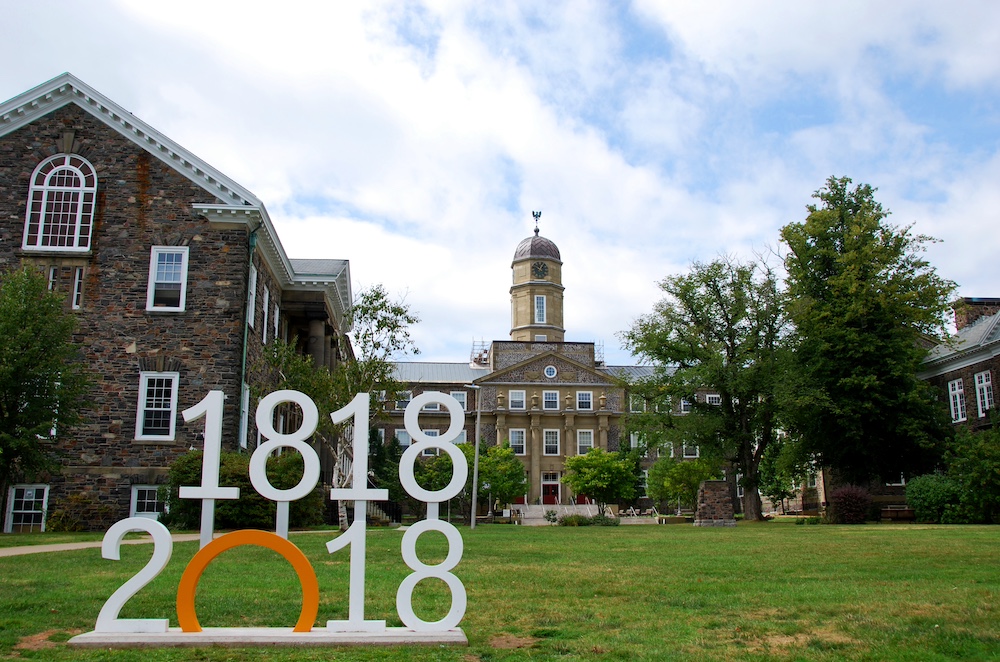
Ryan Sharpe / Wikimedia Commons
Hypothetical Facts #
Suppose that, after recent events surrounding “Divest Dalhousie” protests at the University (see our Week 1 problem), Nova Scotia decides to enact special legislation that preserves and expands access to spaces for members of the public to engage in peaceful protest and other forms of collective association. The Making Space for Nova Scotians Act provides:
4 Where members of the public are exercising their freedom of collective association in outdoor spaces suitable for that activity, the Protection of Property Act, RSNS 1989, c 363 is of no force or effect.
[…]
7 Outdoor spaces where members of the public normally gather are hereby re-zoned to prohibit building development or the construction of permanent structures of any kind.
The Problem #
Assuming that Dalhousie was entitled to exclude protestors prior to the Making Space for Nova Scotians Act, did the Province of Nova Scotia expropriate Dalhousie’s land by enacting this legislation? If so, what can the University do about it?
Answer Framework #
Consider the following framework as you develop your answer to this week’s problem.
Issue 1: Does the Making Space for Nova Scotians Act apply to the Dalhousie quad?
- The materials you read this week identify a key principle used to interpret legislation that affects property rights. What is this principle and how could it be applied in Dalhousie’s case?
Issue 2: If the Act does apply, would Dalhousie be entitled to compensation for expropriation?
- Based on what you have learned from the McLaren saga, from the debate between the judges in Pennsylvania Coal Co. v Mahon, and from the decision in Manitoba Fisheries Ltd., do you think a claim by Dalhousie for compensation would be successful? Why or why not?
The best place to start your readings this week is with the McLaren v Caldwell cases or with the short introduction to riparian rights.
Readings for this Week
Choose one of the reading materials from the list below--ordered alphabetically--to start analyzing this week's problem. At the end of your reading path you should have covered each of the materials on the list.
- House of Commons Debate (Rivers and Streams Bill, 1881): In the course of the legal dispute between McLaren and Caldwell, members of the governing federal Conservatives the Liberal party in opposition debated the whether or not to "disallow" the legislation at issue based on whether or not it was legitimate for the state to expropriate private land without compensation.
- Manitoba Fisheries Ltd. v R, [1979] 1 SCR 101: The appellant company brings a case against the federal government for compensation, claiming that federal legislation creating a monopoly on the purchase, processing and sale of freshwater fish inter-provincially and internationally.
- McLaren v Caldwell et al, 1880 CanLII 12 (ON CA), (1881), 6 OAR 456 (CA), 1882 CanLII 3 (SCC), [1882] 8 SCR 435: McLaren and Caldwell were both in the lumber industry. McLaren owned land that included streams which he claimed were not navigable before he improved them. Caldwell attempted to run his lumber down those streams. Ontario had passed legislation to allow logs to pass freely down streams.
- Pennsylvania Coal Co. v Mahon, 260 US 393 (1922): Pennsylvania Coal and Mahon had an agreement for the coal company to mine beneath Mahon's surface land. Under subsequent legislation, coal mining near houses was forbidden.
- Riparian Rights: An introduction to common law riparian rights, and context for their place in the 19th century lumber industry. This short piece will serve as useful background to understanding the McLaren v Caldwell saga.